Understanding Digital Twin: Connecting the Physical and Digital Worlds
Digital Twin technology enables physical objects, machines, and systems to be represented digitally. It can support monitoring, simulation, analysis, and development across various industries.
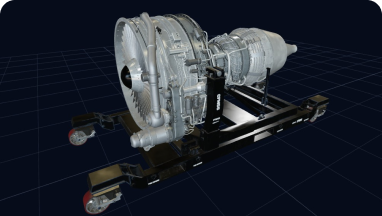
Understanding Digital Twin: Connecting the Physical and Digital Worlds
Digital technology is creating an increasingly closer connection between the physical and virtual worlds. One technology that is gaining attention across industries is Digital Twin.
Digital Twin enables an object, machine, facility, or process in the physical world to be represented digitally. This representation can be used to understand the physical system, run simulations, analyze conditions, and support decision-making.
The technology has applications across industries, particularly in manufacturing, engineering, education, and training.
What Is a Digital Twin?
A Digital Twin is a digital representation of a physical object or system.
Unlike a standard 3D model, a Digital Twin can incorporate data and information related to the actual physical object or system.
For example, a manufacturing machine can have a digital representation containing its structure, components, and operational information.
This approach allows users to gain insights into a physical asset without always having to inspect it directly.
How Does a Digital Twin Work?
A Digital Twin generally involves three key elements:
Physical Object → Data → Digital Model
Data can be collected from sensors, IoT devices, monitoring systems, and operational platforms.
The data can then be used to update and analyze the digital representation.
The quality of the Digital Twin depends heavily on the quality, relevance, and consistency of the data being used.
Digital Twin vs. 3D Model
Digital Twin and 3D models are often considered similar because both can represent objects digitally.
However, they serve different purposes.
A 3D model primarily focuses on the visual and geometric representation of an object.
A Digital Twin can combine that visual representation with data and information related to the actual physical object.
In other words, a 3D model can be part of a Digital Twin, but a Digital Twin typically has a broader scope.
Benefits of Digital Twin for Industry
Digital Twin technology can support several industrial applications.
Monitoring
Digital representations can help users access information about machines and systems without always being physically present.
Simulation
Different scenarios can be tested digitally before changes are implemented in a physical system.
Performance Analysis
Operational data can be analyzed to understand machine or system performance over time.
Training
Digital Twins can be used as training environments where users can learn about systems and equipment through interactive digital models.
Product Development
Engineering teams can use digital representations to evaluate designs and potential changes before physical production.
Digital Twin for Training
One interesting application of Digital Twin technology is training and simulation.
Some training environments require expensive equipment, specialized facilities, or extensive preparation.
Digital Twins can provide a digital representation of those environments and systems, allowing learners to explore components, procedures, and scenarios through simulations.
This can help create more interactive training experiences and provide learners with a better understanding of a system before working with the physical equipment.
Integration with Other Technologies
Digital Twin technology can be combined with several other technologies.
3D visualization can provide the visual representation.
IoT can provide data from physical devices and machines.
Artificial Intelligence can help analyze data and identify patterns.
Virtual Reality and Augmented Reality can provide more immersive ways to interact with digital models.
Together, these technologies can support increasingly sophisticated visualization and simulation systems.
Challenges of Digital Twin Implementation
Implementing a Digital Twin requires careful consideration.
One important factor is data quality. A digital representation becomes more useful when its underlying data is accurate, relevant, and consistently updated.
Organizations also need to consider infrastructure, system integration, data security, and the technical capabilities required to operate the platform.
Therefore, Digital Twin implementation should be aligned with specific organizational needs and objectives.
The Future of Digital Twin
Advances in IoT, cloud computing, AI, 3D visualization, VR, and AR are creating new opportunities for Digital Twin technology.
In the future, digital representations may not only be used to visualize physical assets but also to support simulation, analysis, and operational decision-making.
For companies in industries such as manufacturing, engineering, education, and training, Digital Twin technology provides an opportunity to explore more connected digital experiences.
Conclusion
Digital Twin technology creates a connection between physical objects and their digital representations.
By combining digital models, data, 3D visualization, and supporting technologies, Digital Twins can support monitoring, simulation, analysis, product development, and training.
This technology demonstrates how physical and digital environments can work together to support modern business and operational needs.