How 3D Technology Is Changing the Way We Learn and Train
3D technology is creating more interactive and immersive learning experiences. Discover how three-dimensional visualization can improve understanding, simulation, and training effectiveness.
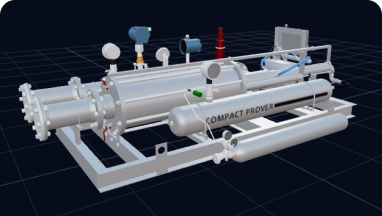
How 3D Technology Is Changing the Way We Learn and Train
The development of digital technology has changed the way people access information and develop new skills. One technology that is increasingly being used in education and training is 3D technology.
With three-dimensional visualization, objects and environments that were once difficult to explain through images or text can be presented in a more realistic and interactive way. This creates new opportunities for more engaging learning experiences while helping users understand complex subjects.
What Is 3D Technology in Learning?
3D technology in learning refers to the use of three-dimensional objects, environments, and simulations as part of the learning process.
Unlike traditional two-dimensional media, 3D models allow users to view an object from different angles. Users can also interact with objects, examine specific components, and understand the relationship between different parts.
This approach can be applied across various fields, including education, manufacturing, healthcare, engineering, and corporate training.
Why Does 3D Make Learning More Engaging?
One of the challenges in learning is explaining concepts that are abstract or difficult to visualize.
For example, understanding the internal structure of a machine can be difficult using static images alone. With a 3D model, machine components can be displayed in greater detail and even separated to reveal internal structures.
This type of visualization helps learners understand information through visual and interactive experiences.
Benefits of 3D Technology for Training
Some of the benefits of using 3D technology in training include:
1. Easier Understanding of Complex Concepts
Complex subjects can be visualized as three-dimensional objects, making them easier to explore and understand.
2. Increased Interaction
Learners can interact with objects and environments instead of simply reading or viewing static content.
3. Simulation Support
3D technology can be used to simulate different situations without requiring physical equipment or environments.
4. Safer Training Environments
For training involving machinery, industrial equipment, or specific situations, 3D simulations can provide an environment where learners can practice before working in real-world conditions.
5. Better Connection Between Theory and Practice
Interactive visual experiences can help learners connect theoretical concepts with practical applications.
Examples of 3D Technology in Learning
3D technology can be applied to many different learning and training scenarios.
Industrial Training
3D models can be used to introduce machine components, operating procedures, and maintenance processes.
Technical Education
Students can explore machines, buildings, mechanical systems, and other technical objects through three-dimensional models.
Safety Training
Simulated work environments can be used to introduce safety procedures and help learners understand potential workplace risks.
Product Presentation
Companies can use 3D models to showcase products in detail without always requiring a physical prototype.
3D Is More Than Just Visualization
The value of 3D technology in learning is not simply about making educational content look more attractive.
Its main advantage is the ability to turn information into an experience that users can explore. Learners can view objects from different perspectives, understand their structure, and interact with simulations based on specific scenarios.
When designed properly, 3D technology can help connect theory with practical experience.
Challenges of Implementing 3D Technology
Although 3D technology offers many opportunities, implementation also requires proper planning.
Creating 3D assets requires time, expertise, and appropriate hardware and software. Learning content must also be designed around specific educational objectives so that 3D does not become merely a visual element without meaningful learning value.
For this reason, organizations should define their learning objectives and requirements before implementing 3D technology.
The Future of Learning with 3D Technology
As digital technology continues to evolve, the use of 3D in education and training is expected to expand.
Integration with technologies such as Virtual Reality (VR), Augmented Reality (AR), Artificial Intelligence (AI), and digital learning platforms can create increasingly interactive and adaptive learning experiences.
For organizations and companies, this approach can support the development of modern training systems that align with the needs of digital learning.
Conclusion
3D technology provides a new way to deliver information and learning experiences. Through visualization, interaction, and simulation, complex subjects can become easier to explore and understand.
Its applications range from education and industrial training to professional development.
When used effectively, 3D technology can make learning more visual, interactive, contextual, and connected to real-world practice.